
whatsupenglish theory
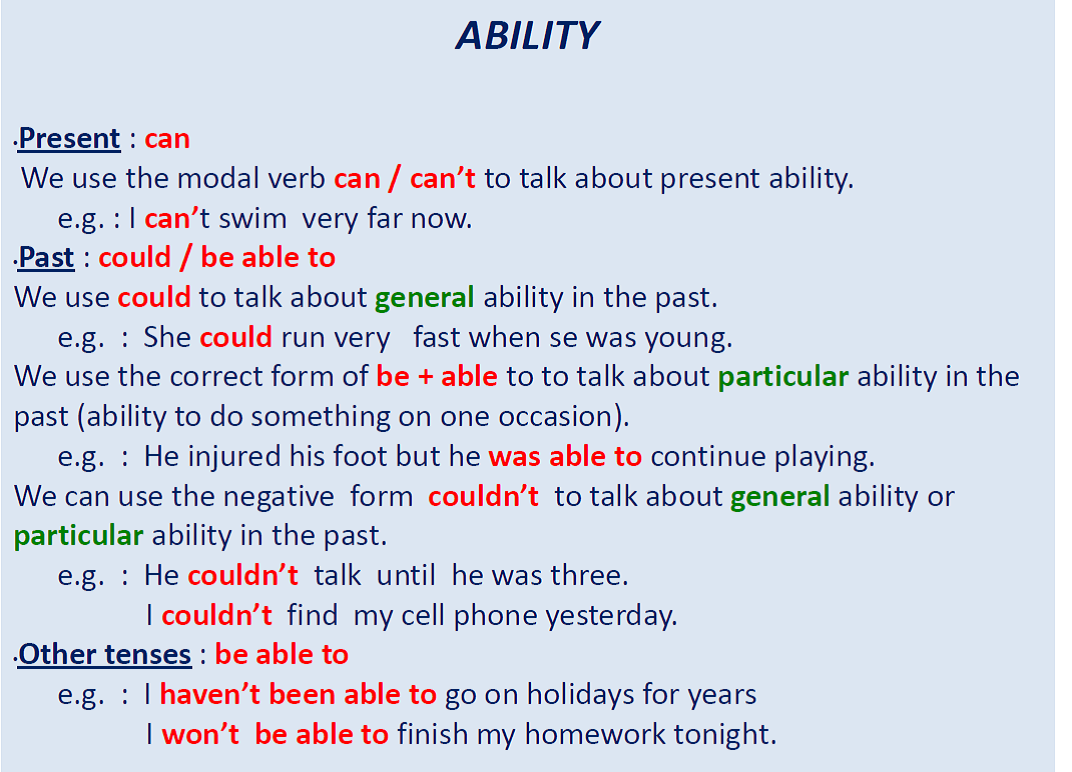
Learn how to describe Past Abilities in English. Ability means the power or skill to do something. In the present tense, can is the most common expression of ability. In the past, we use phrases like ' could ', ' able to ' and ' manage to. ' There are different rules of how to use each phrase.
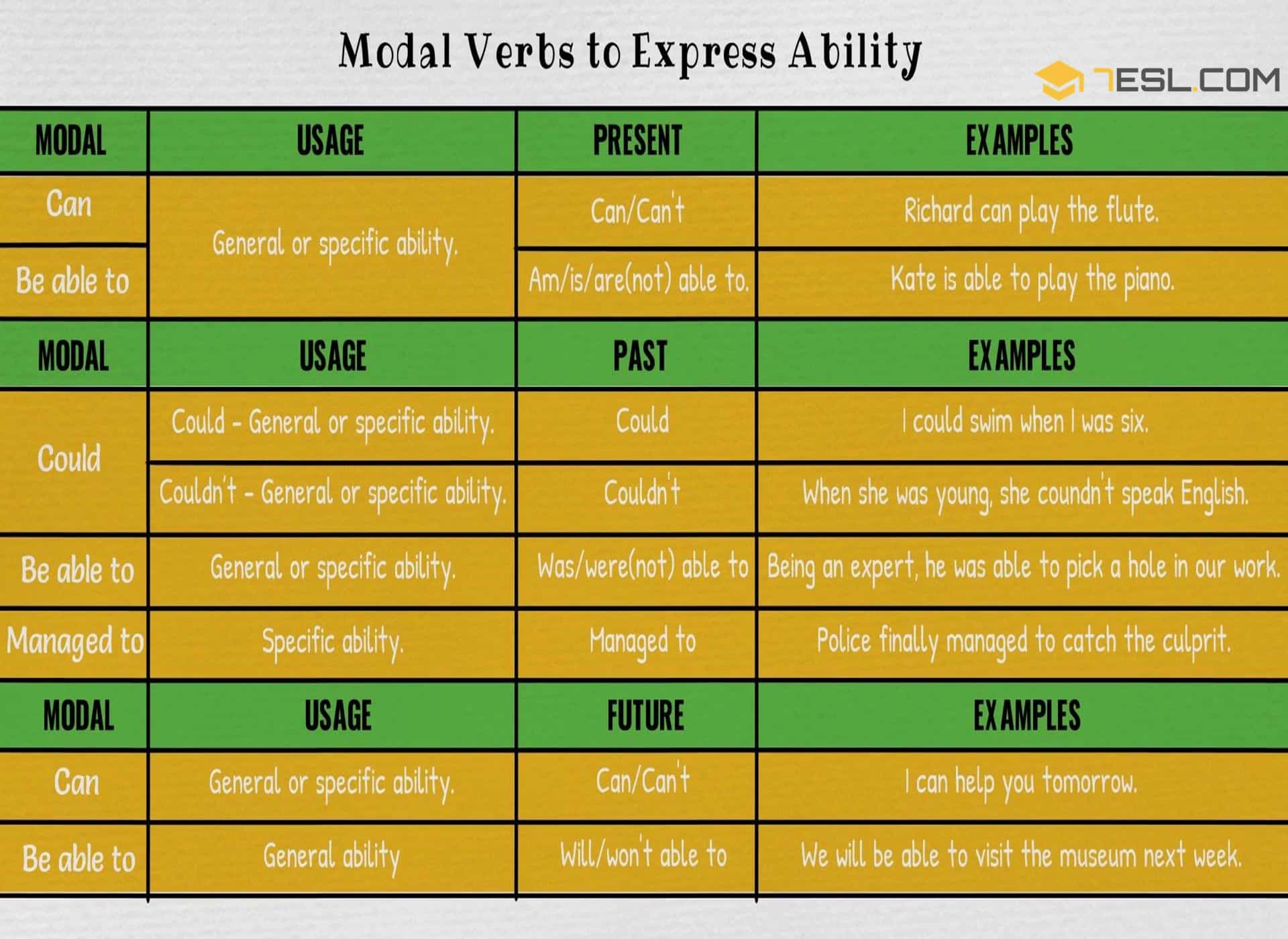
Modals Of Ability Modal Verbs To Express Ability Esl English
bar - n. the test that a person must pass in order to be a lawyer. Both "can" and "be able to" are used to express ability. But the way we use them changes in the past tense. On today's.
Past Simple Interactive worksheet Past Tense, Interactive Activities

The two statements have the same meaning. Both "can" and "be able to" are used to express ability. In a spoken exchange, "can" is far more common while "be able to" sounds less natural. However, when we are talking about the past, the rules change a bit. Today, I will show you how to express past abilities with "could.
Using Could and Example Sentences English Grammar Here

In English grammar, you can't have two modals together. For example, if you want to talk about ability in the future, you can't use "will can", but you can use " will be able to ", because "be able to" is not a modal. I will be able to attend the meeting tomorrow. You will be able to enter the competition. He will be able to get.
Modals of ABILITY in English, Definiton and Examples English Study Page
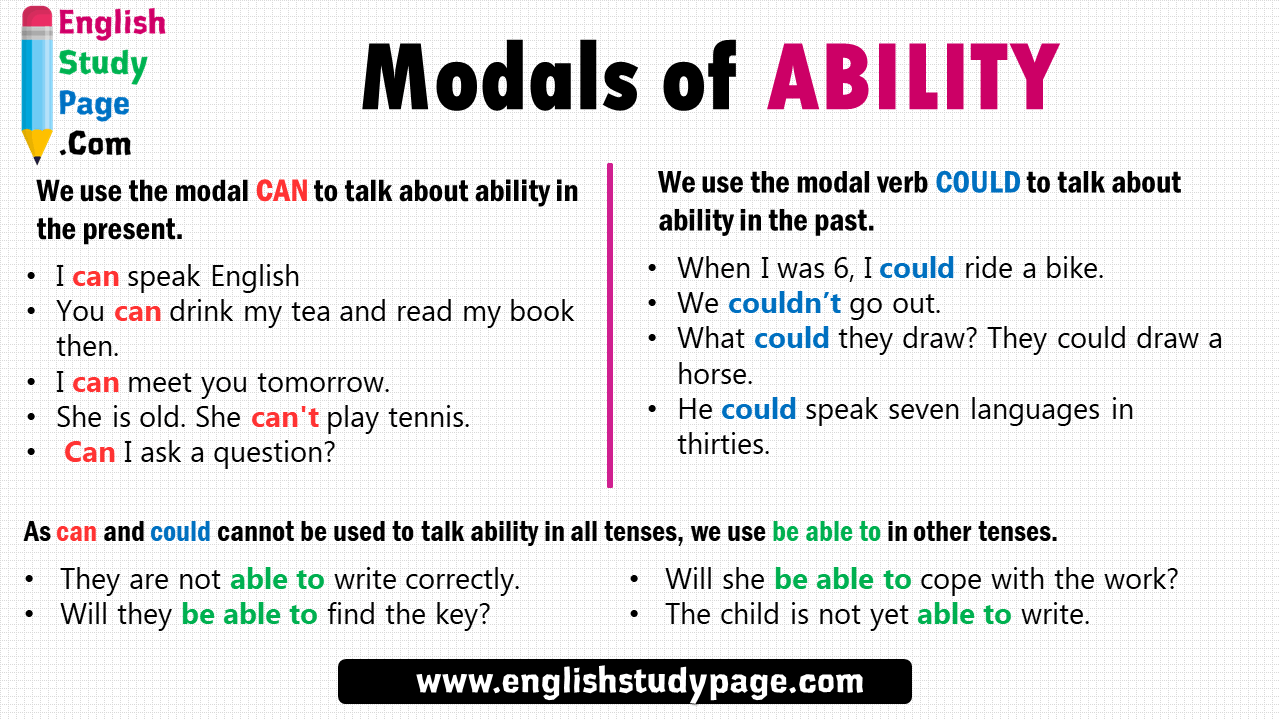
To talk about abilities when no form of can exists, for example in the present perfect. 2. To talk about an ability in a specific situation or at a specific moment in the past. 3.. To talk about specific abilities in the past in a negative sentence. 3. To talk about a hypothetical ability in the past, present or future.
ESL English PowerPoints past ability

to express ability in the past. We use the modal verb " could " to express ability in the past. Examples: When Jane was a student, she could study for 10 hours a day. When Mark was young, he could play the guitar. to describe sensations in the past. We use " could " with verbs of the senses to describe sensations in the past. "
can could ability and permission Buscar con Google Verb Examples

In this context, which is describing ability, 'can' is the present form and describes his ability now. 'Could' is the past form and describes his ability in the past. We would probably use 'could' if the person is no longer alive, for example, or has forgotten the languages for some reason.
the past simple or past progressive worksheet is shown in this image

When we talk about ability, we mean two things. First, we mean general ability. This is something that once you have learned you can do any time you want, like being able to read or swim or speak a language, for example. The other kind of ability is specific ability. This mean something that you can or can't do in one particular situation.
Past ability ESL worksheet by Halildurak
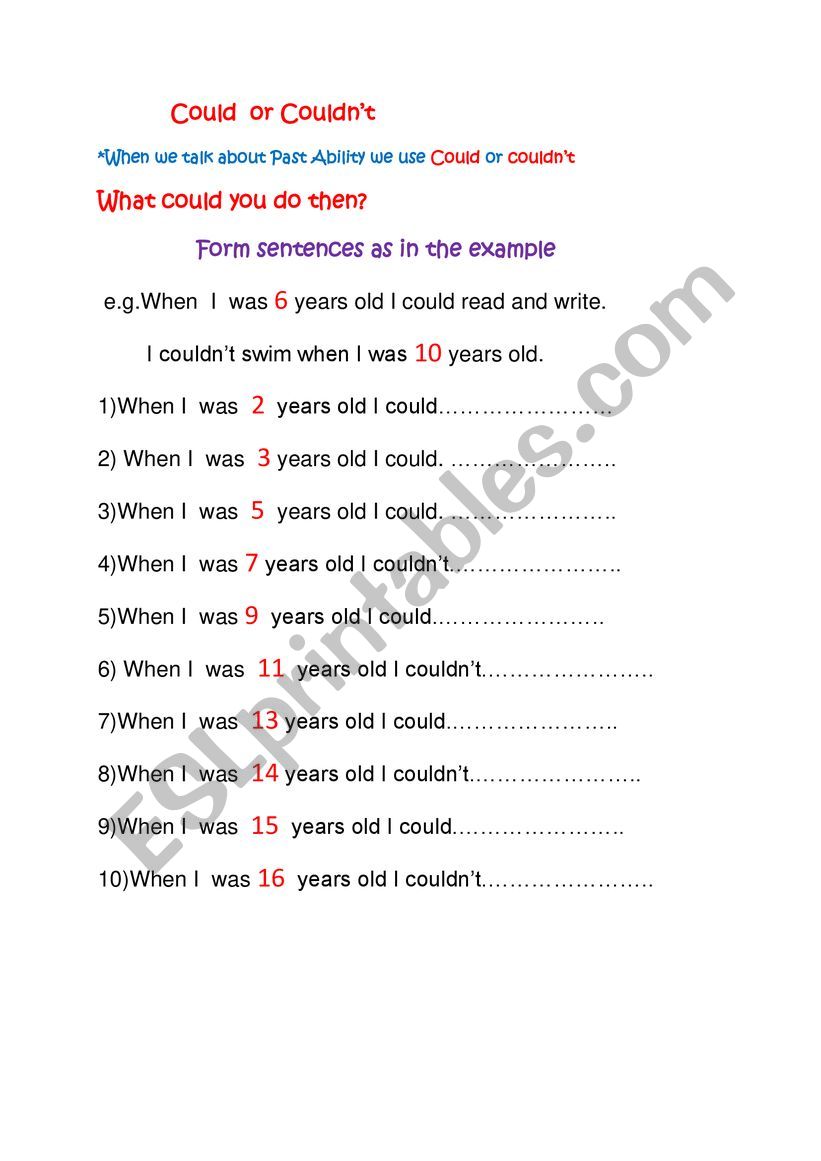
The modal verb "could" helps express someone's ability to do something in the past. It is used to express the speaker's ability or permission to do something in the past. Examples of sentences with the modal verb "could" are: I could run a mile in five minutes. He could solve the problem quickly. She could speak Spanish fluently.
the past simple past continuous, past perfect worksheet for grade 1

Kathy wasn't able to get here on time because of the accident on the highway. ( Note that i n the negative form, we can use couldn't and was/were able to. For this example, we could also say "Kathy couldn't get here on time because of the accident on the highway.") managed to. Used to talk about specific achievements that were difficult.
PPT Past Simple PowerPoint Presentation, free download ID9299778
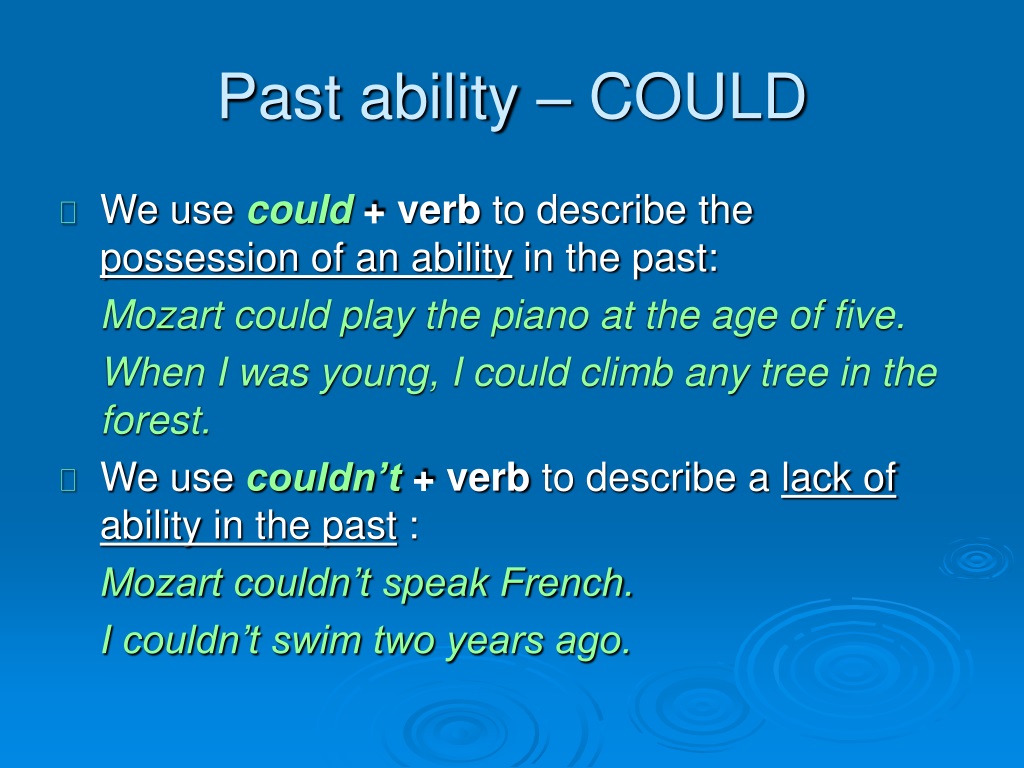
Talking about Ability In the Past. In the past tense, we use "could" or "was/were able to" to express ability. Examples: "I could swim when I was five years old." "She was able to fix the car yesterday." "They could speak French fluently after studying it for several years." "We were able to finish the marathon last month.
Modal Verbs in Modern English.. CanAbility, May possibility, Should

This shows that Alan has the ability to swim. 1. Modals for Ability. Let's start with expressing ability! We use can, be able to and could to show that someone has (or doesn't have) an ability to do something. Look at these examples: Present/Future Ability. Negative. Past Ability.
English Grammar Modal Verbs ESLBuzz Learning English

Ability on one occasion - successful. When we talk about achieving something on a specific occasion in the past, we use was/were able to (= had the ability to) and managed to (= succeeded in doing something difficult ). The burglar was able to get in through the bathroom window.
Lesson 4 Describing Past Abilities Lingo Best English Academy

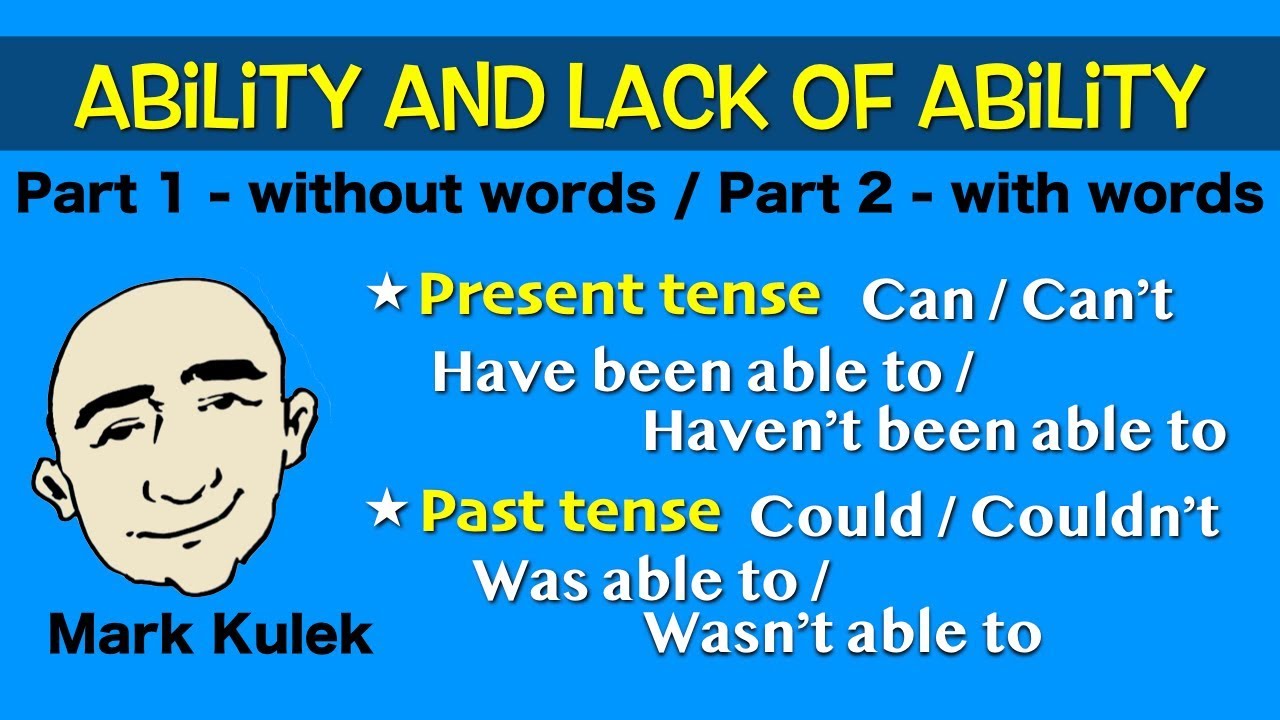
Present tense to describe ability: can. Past tense of can: could, was able to, were able to, managed to. Past tense of can't: could not, was not able to, were not able to, did not manage to. Past participle of can: been able to, managed to. Future tense of can: will be able to, will manage to.
Ability / Lack of Ability Present tense can, have been able to/ Past
March 17, 2024. Modals of ability in English are used to express a person's capacity or capability to do something. The main modals of ability in English are: Can: It expresses general ability or capability to do something. For example, "I can swim.". Could: is the past tense form of "can" and is used to indicate past ability.
88 modalsofability past can ingles papus Grammar Practice
A modal verb is an auxiliary (helping) verb that expresses a particular quality of a verb. Modal verbs are used with the infinitive (base form) of the main verb to modify its meaning. MODALS INCLUDE WORDS LIKE: can, could, may, might, must, shall, should, will, and would. The placement of modal verbs depends on the type of sentence or tense.