
Present Perfect Continuous Tense Definition, Rules and Useful Examples • 7ESL Learn english

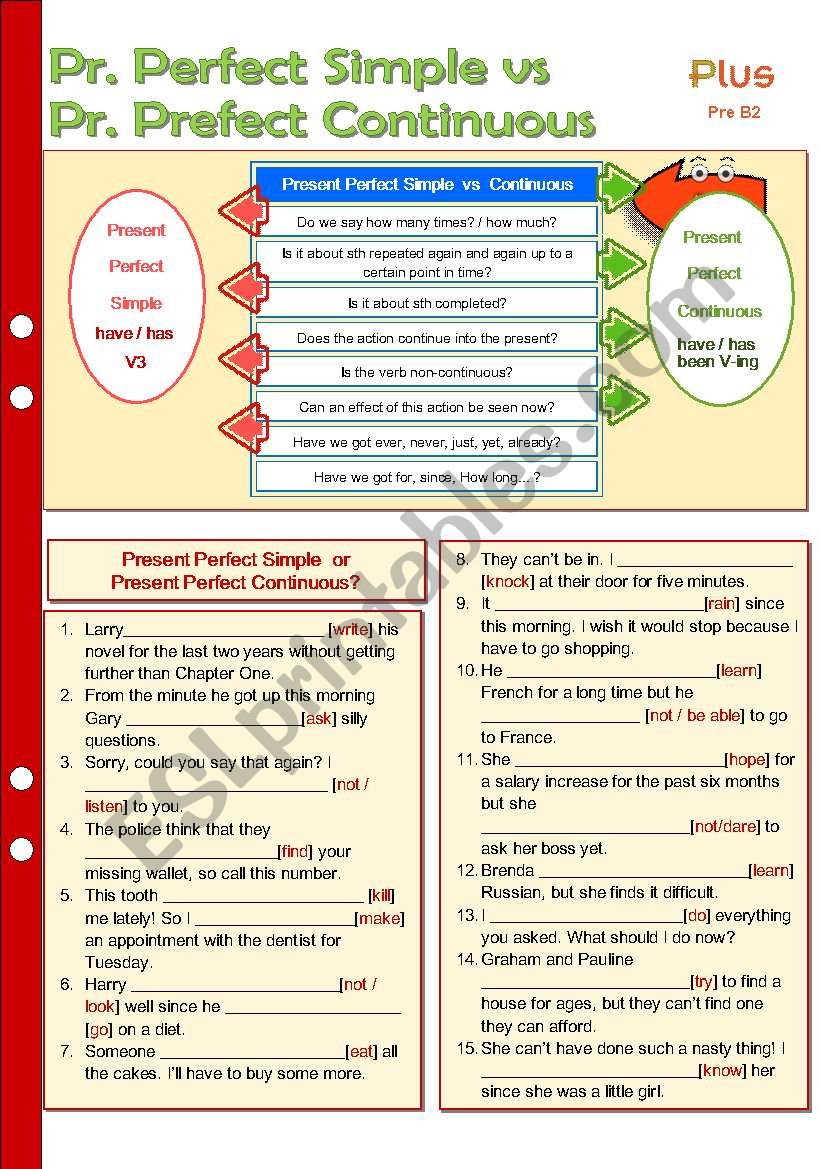
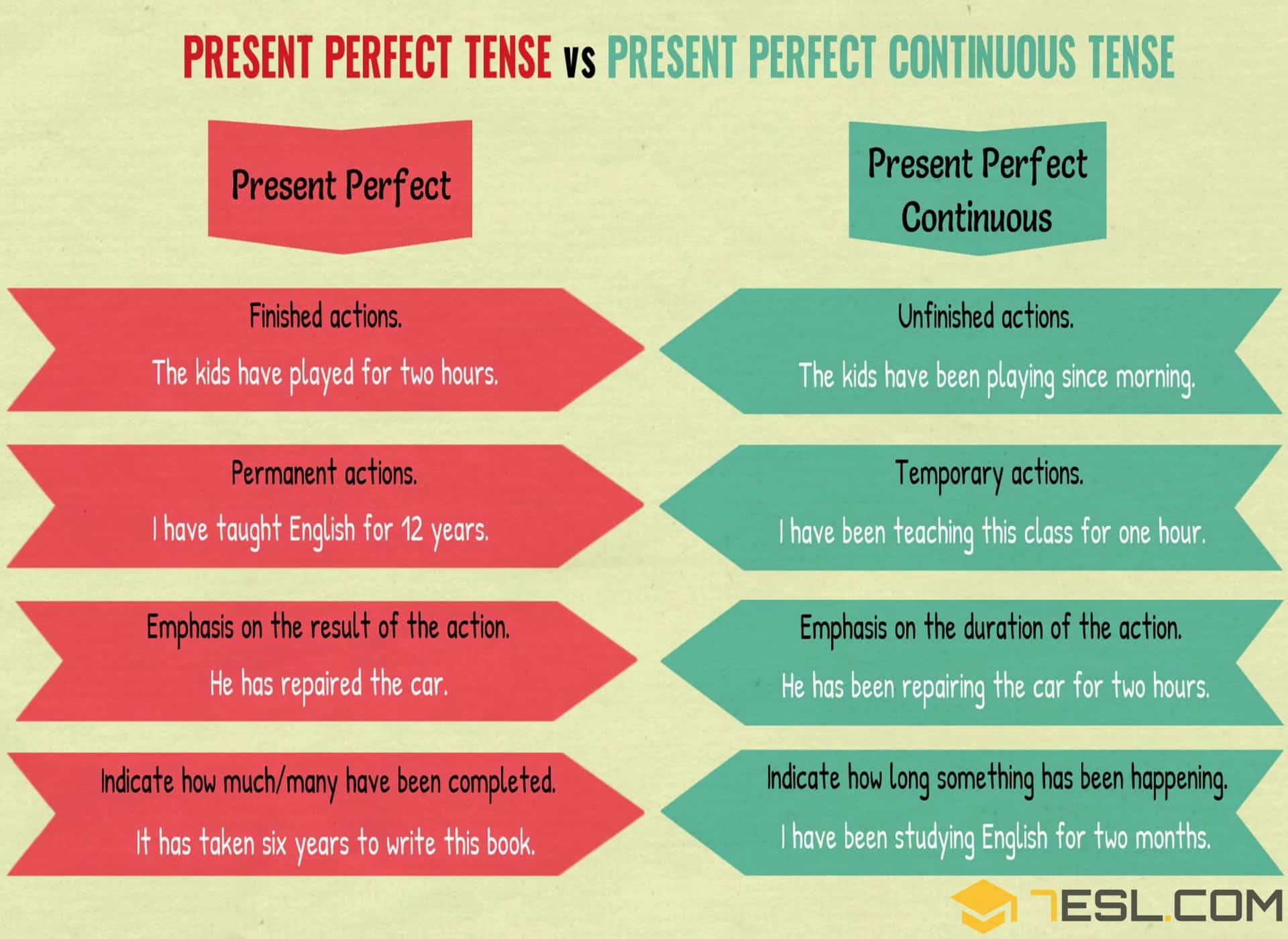
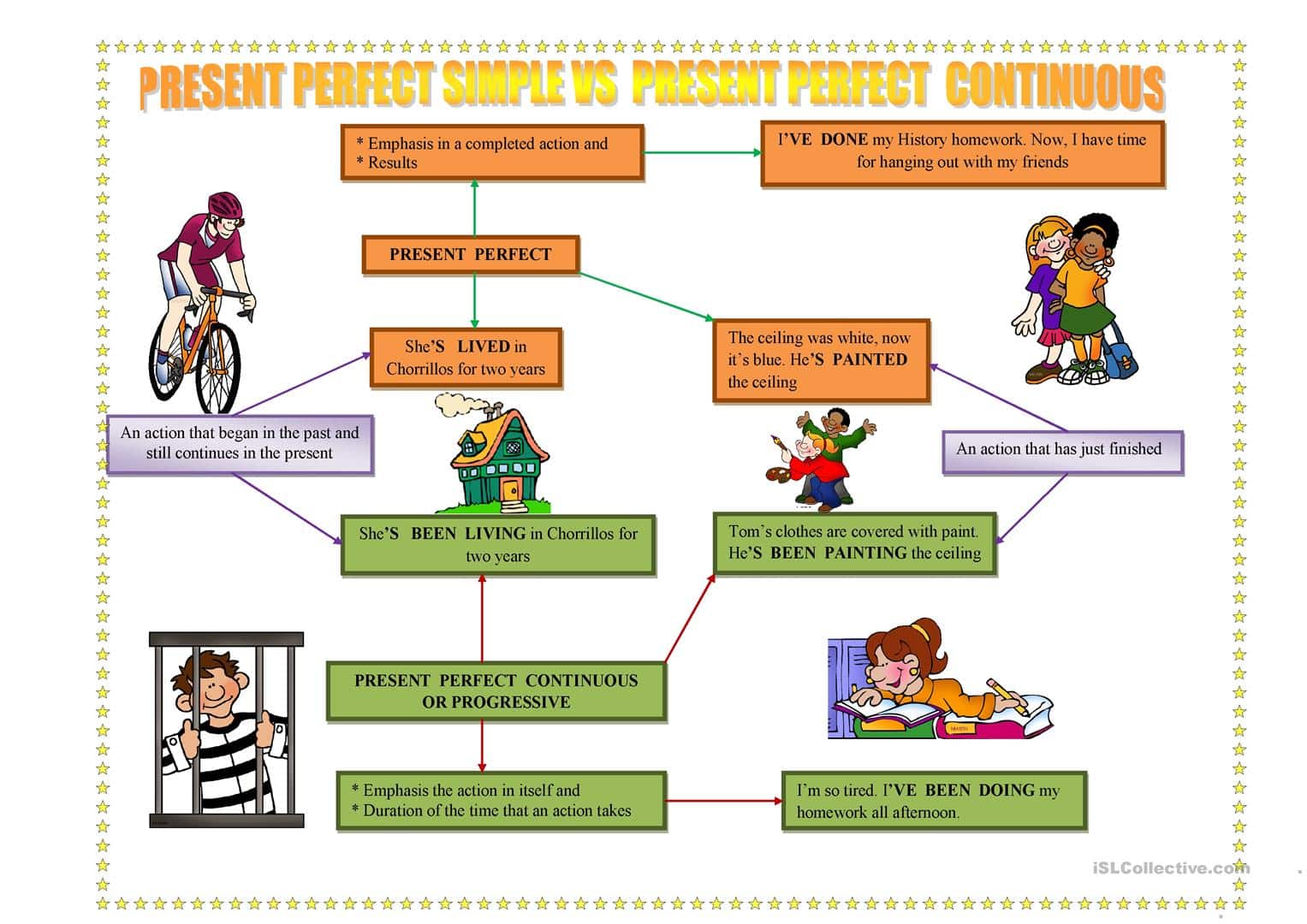
We use the present perfect to connect the past and the present. The cafe has just opened. (= It is open now.) People have been arriving in large numbers. (= They are still arriving now.) We can often use either the present perfect simple or the present perfect continuous with since or for when something started in the past and continues now, or.
English Tenses Present Perfect Simple vs. Present Perfect Continuous ESL Buzz

Past simple, present perfect, present perfect continuous Past simple, present perfect, present perfect continuous. Loading ad. LADYINHAT Member for 3 years 6 months Age: 13-18. Level: Pre-Intermediate. Language: English (en) ID: 667620. 26/01/2021. Country code: LT.
Present Perfect Simple Vs Present Perfect Continuous Gufa
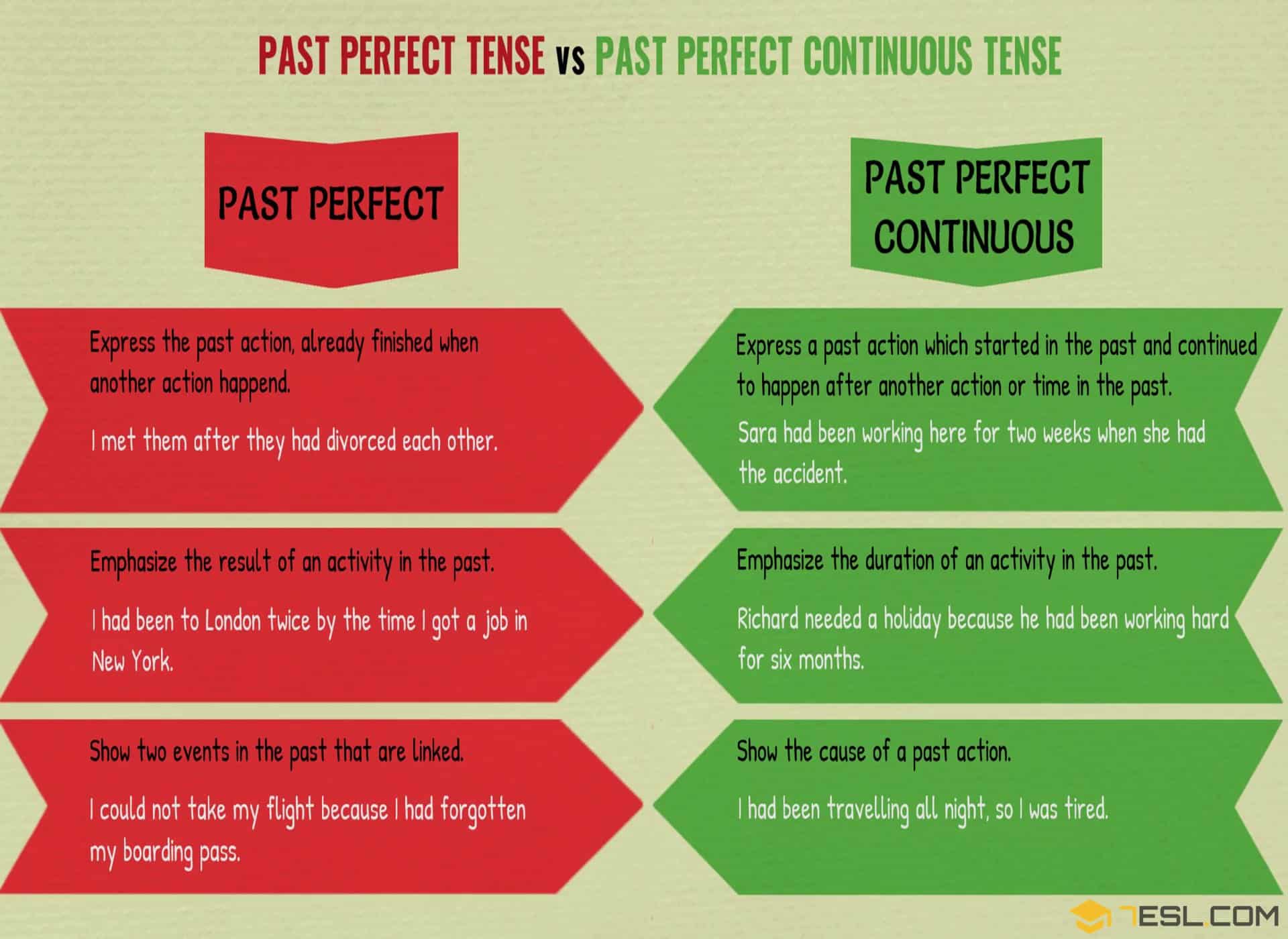
Past Continuous: I was talking to Mary when you came in. Past Perfect: I had talked to Mary before eating dinner. Past Perfect Continuous: I had been talking to Mary for two hours before we finally hung up. Present Tense: Simple Present: I talk to Mary at least once a day. Present Continuous: I am talking to Mary right now.
Past Simple Present Perfect online presentation
As the present perfect refers to an action that occurred at an unspecified time in the past, sentences in the present perfect commonly use adverbs that refer to non-specific time (e.g., "ever," "never," "once," and "so far"). Examples: Present perfect and adverbs. Joseph has never lived in South Africa. Laura has eaten at this.
Present Perfect Continuous Tense in English English Study Here

Tense Review 1: simple past, present perfect simple / continuous. Insert the verb either in the simple past, present perfect simple, or present perfect continuous (whenever possible) writing in the text area, then click "Show Solutions" to see the correct sentences.
Past Simple Vs Past Continuous Vs Present Perfect Vs Past Perfect Exercises Design Talk
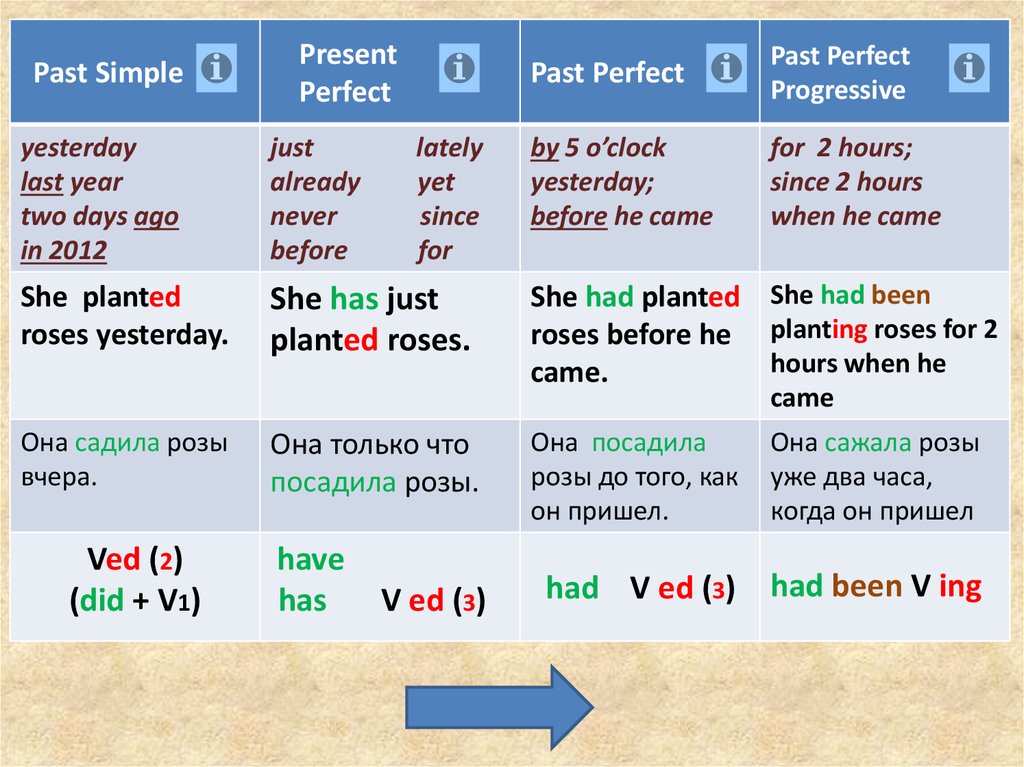
Past simple, past continuous, past perfect - grammar chart. Download full-size image from Pinterest Past simple. We use the past simple to talk about completed actions in the past. We ate out yesterday. (the action is finished) In a story, we use the past simple to talk about past events in chronological order, i.e. the main events of a story.
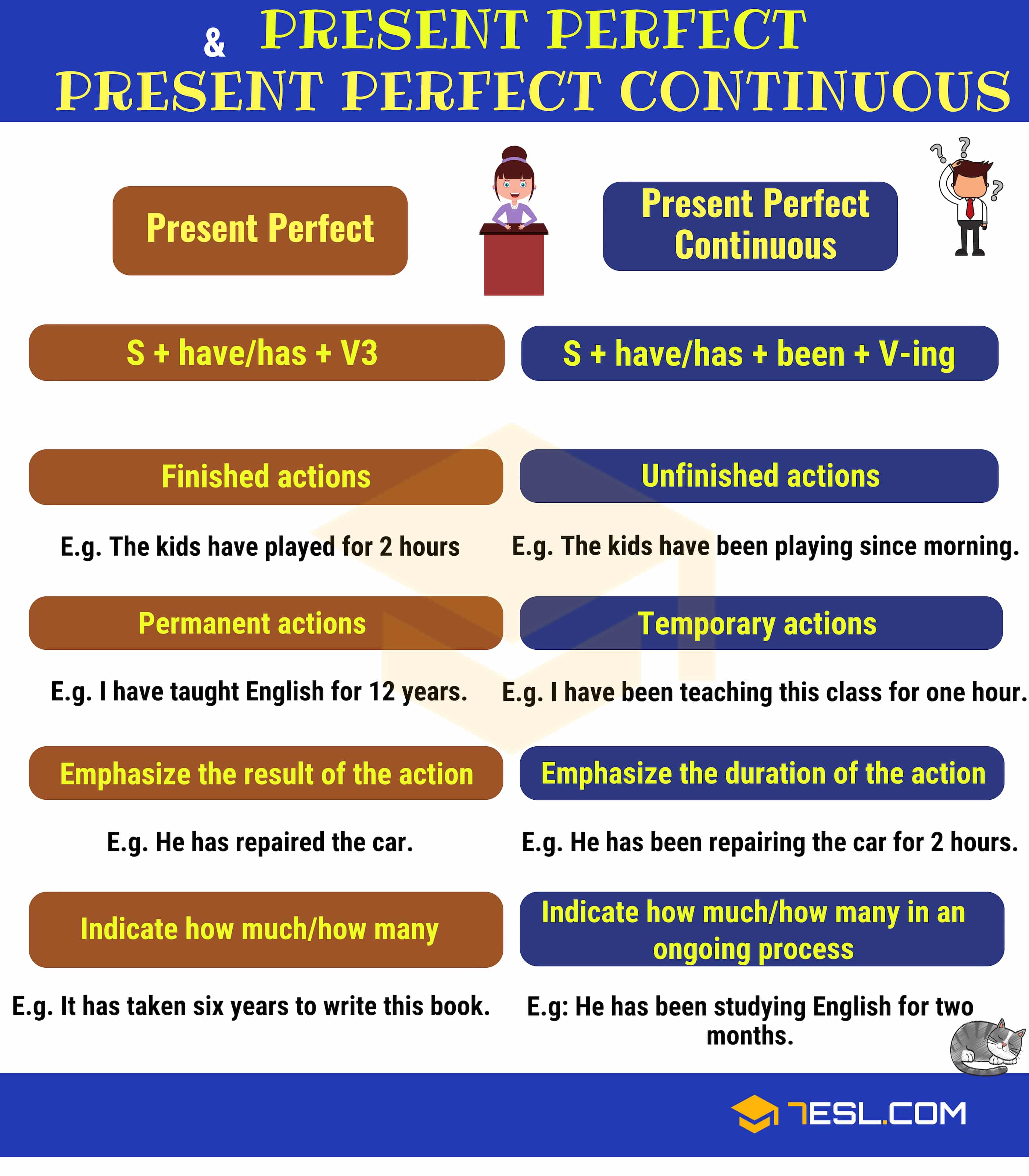
Present Perfect and Present Perfect Continuous • 7ESL
Past simple / Present perfect (simple / continuous) Past simple and Present perfect. The past simple is used to talk about completed actions at a particular point in the past, often with dates or times and words like yesterday, last and ago:. Kurt went to Canada in 1991.; I didn't see you yesterday. Where were you? The Present perfect is used to talk about. a) recent actions or events when no.
Past Perfect Simple and Continuous ChaseoiKent

The past simple tense is used to refer to definite time, while the present perfect tense refers to indefinite time. Examples: I saw the Eiffel Tower in 2007. (past simple) I have seen the Eiffel Tower. (present perfect) The past simple tense indicates series of finished actions or repeated actions; the present perfect tense expresses experience.
Practise the Past Simple, the Past Continuous and the Present Perfect with this worksheet. KEY

We can also use the present perfect with lately or with all + period of time (all day, all morning, all my life, etc.) to talk about actions that started in the past and continue in the present. She's been with me all day. I've been very busy lately. Don't use ago. We can't use ago with the present perfect.
Test Engleski jezik Osmi razred Present perfect simple and continuous
ID: 527055. 22/11/2020. Country code: UA. Country: Ukraine. School subject: English as a Second Language (ESL) (1061958) Main content: Present Simple-Presen Continuous-Present Perfect-Past Simple (1207596) Present Simple/Presen Continuous/Present Perfect/Past Simple.
Present Perfect Continuous Tense Detailed Expression English Study Here

Verb Tense Exercise 14 Present Perfect, Past Perfect, Present Perfect Continuous, and Past Perfect Continuous f t p Using the words in parentheses, complete the text below with the appropriate tenses, then click the "Check" button to check your answers.
Present Perfect and Present Perfect Continuous • 7ESL
The present perfect is formed from the present tense of the verb have and the past participle of a verb. We use the present perfect: for something that started in the past and continues in the present: They've been married for nearly fifty years. She has lived in Liverpool all her life. when we are talking about our experience up to the present:
PAST SIMPLEPAST CONTINUOUSPRESENT… English ESL worksheets pdf & doc

1: The present perfect continuous can be used to emphasise the length of time that has passed. The present perfect simple is generally neutral: They've been waiting for hours! (This emphasises the length of time). They've waited for hours. (This doesn't emphasise the length of time). 2: On the other hand, the present perfect simple is often.
PAST PERFECT SIMPLE PRESENT PERFECT SIMPLE AND PROGRESSIVE SIMPLE FUTURE WILL AND BE GOING TO

We use the present perfect for actions which started in the past and are still happening now OR for finished actions which have a connection to the present. We CAN'T use the present perfect with a finished time word: NOT: I've been to the museum yesterday. Present perfect or past simple exercise 1; Present perfect or past simple exercise 2.
Когда употребляется present perfect continuous Грамматика

In British English, we use the present perfect to talk about an action or situation in the past when we don't know the exact time or it isn't important. I've invited Dave and Sue for dinner. We use the past simple to talk about a specific time in the past. I phoned my brother yesterday.
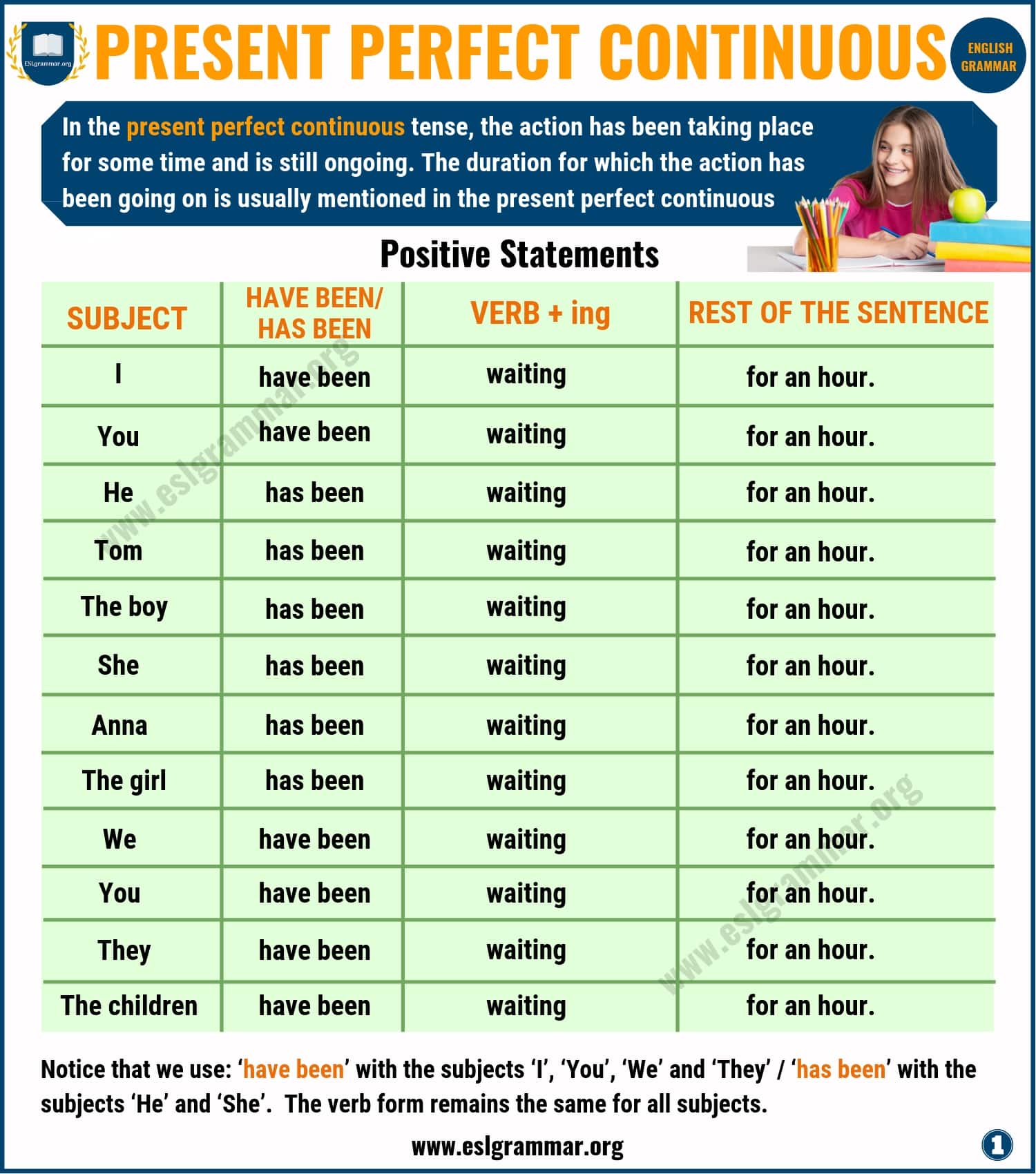
Present Perfect Continuous Tense Definition, Useful Examples & Excercise ESL Grammar
Grammar B1-B2: Present perfect simple and present perfect continuous: 1. Read the explanation to learn more. Grammar explanation. We use both the present perfect simple (have or has + past participle) and the present perfect continuous (have or has + been + -ing form) to talk about past actions or states which are still connected to the present.